Local SEO for retail stores, chains and showrooms

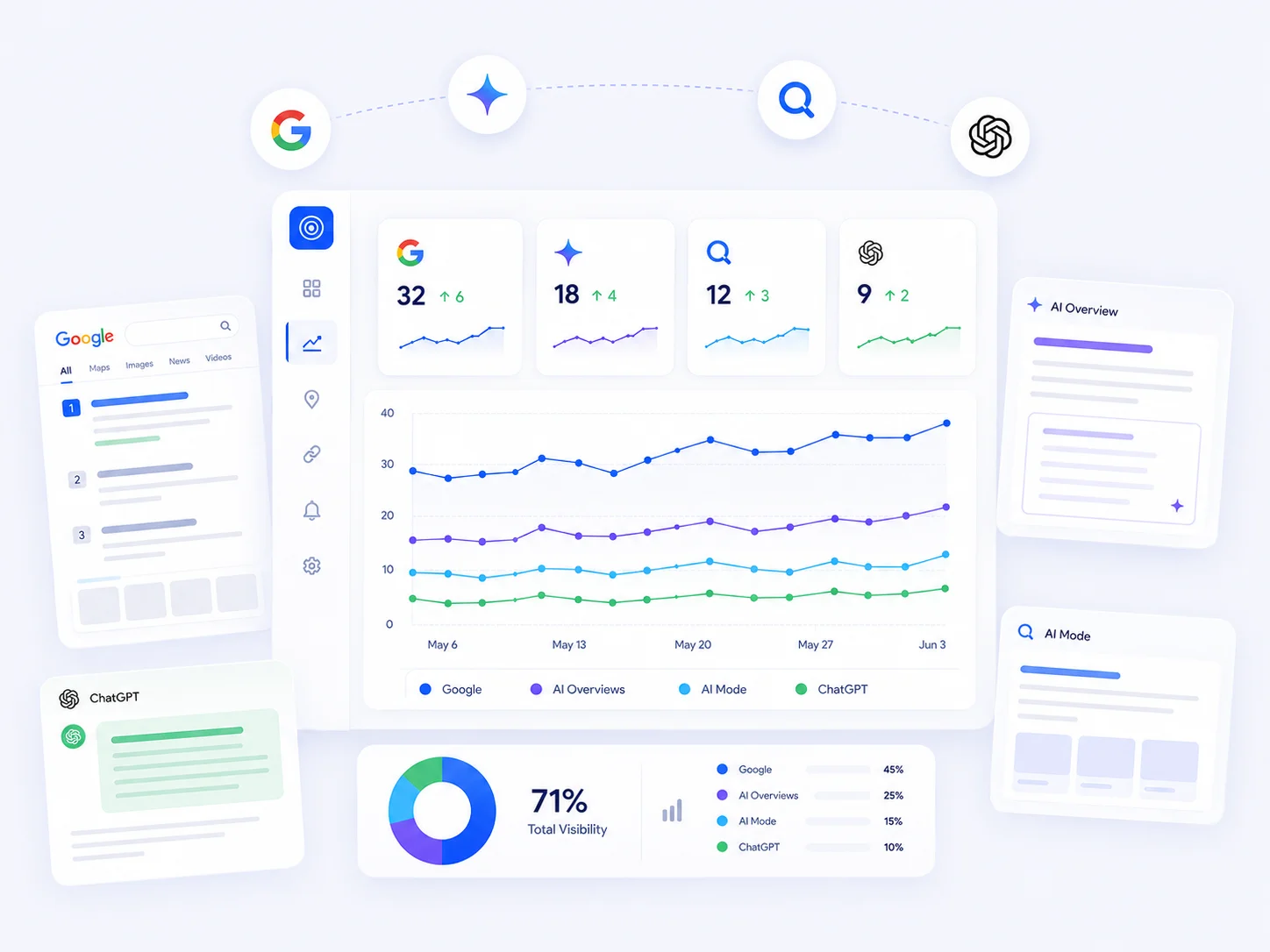
A store's local visibility is decided product by product. 'Running shoes', 'phone repair' and 'sofa showroom' can each show a different set of stores, chains and independents share the same Map Pack, and for retailers that share their local inventory with Google, products in stock nearby can appear before a store is listed at all. For an independent the question is which searches you are missing; for a chain it is which stores. SearchOps answers both, and shows what ChatGPT and Gemini recommend when shoppers ask where to buy.

  • Product and category searches tracked for every store
  • Google Maps visibility across each store's catchment
  • What ChatGPT and Gemini recommend when shoppers ask where to buy
  • Direction requests, calls and website clicks for each store

The problem

Chains and independents compete for the same few spots

Google asks chains to use the same name and category at every location, so a national retailer's stores look alike on the map, and independents take them on search by search. For a chain, the risk is a brand average that hides the stores that have dropped out of their local searches. For an independent, the opportunity is the product and category searches where a more specific offer can win.

01

Category and product searches can each show a different set of stores within the same town.

02

Attributes such as in-store pickup, delivery and accessibility show on your profile, so missing or wrong details can cost a visit.

03

Google's 'open now' filter reads your opening hours, which matters for late-night and weekend searches.

04

When a shopper asks an AI assistant where to buy locally, the answer names only a few stores and draws on the sites it trusts.

Questions SearchOps answers

What store owners and retail marketers need to know

For a store owner or a regional manager, these five questions show where to act first. Each one is answered by data SearchOps collects for every store.

01Products

Do we appear for the products and brands people look for nearby?

Track category, product and brand searches for each store's town, such as 'outdoor clothing store Denver', 'iPhone repair near me' or 'wedding dress shop Leeds'. Google Search Visibility shows the Map Pack, web results and AI Overviews for each one, on desktop and mobile.

Visibility for the searches that bring people through the door

02Catchment

How far does each store's visibility reach?

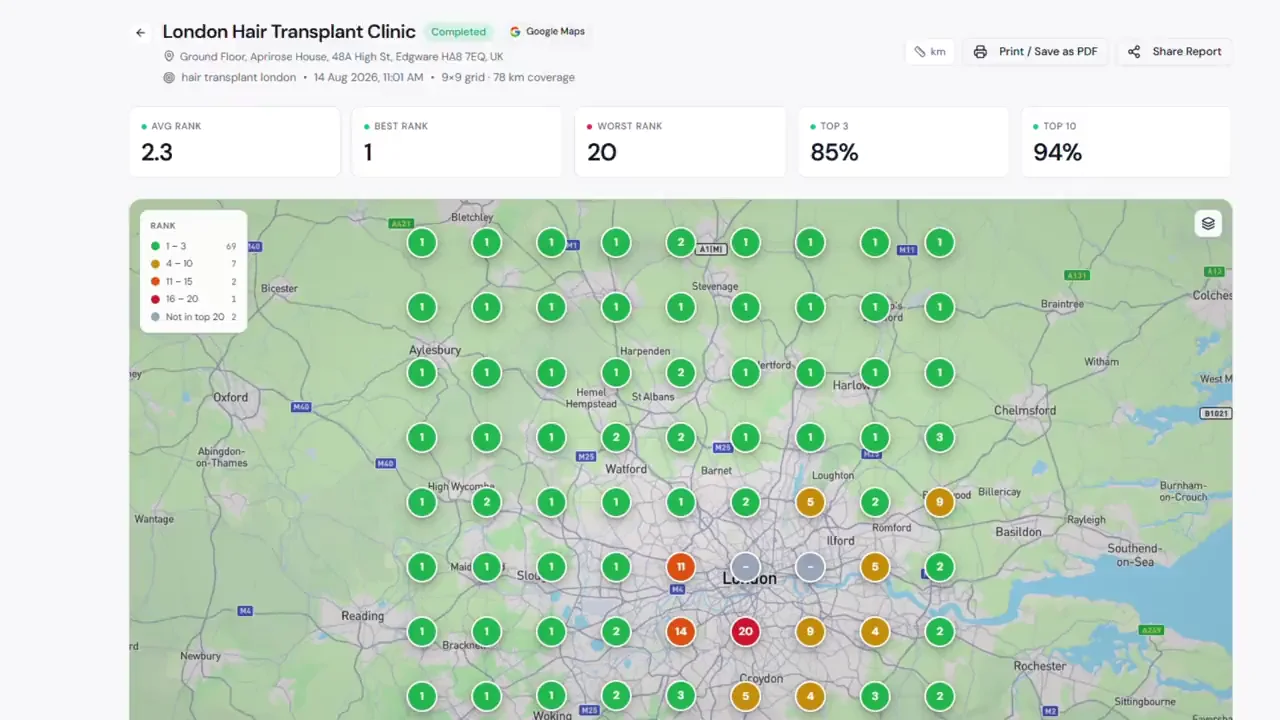
Geo-grid scans show each store's Google Maps position across its catchment, from a high street to a whole metro area, with the stores ahead of it at each point. Map Insights compares you with those leaders on categories, reviews and listing details.

The ground each store holds, and where shoppers go instead

03Store estate

Which of our stores are underperforming in search?

Every store is its own tracked location, so you can compare map coverage, rankings, reviews and profile results across the estate. Connected profiles show direction requests, calls and website clicks for each store, and the searches that showed it.

A list of stores to support, not an average

04AI answers

What do AI assistants recommend when shoppers ask where to buy?

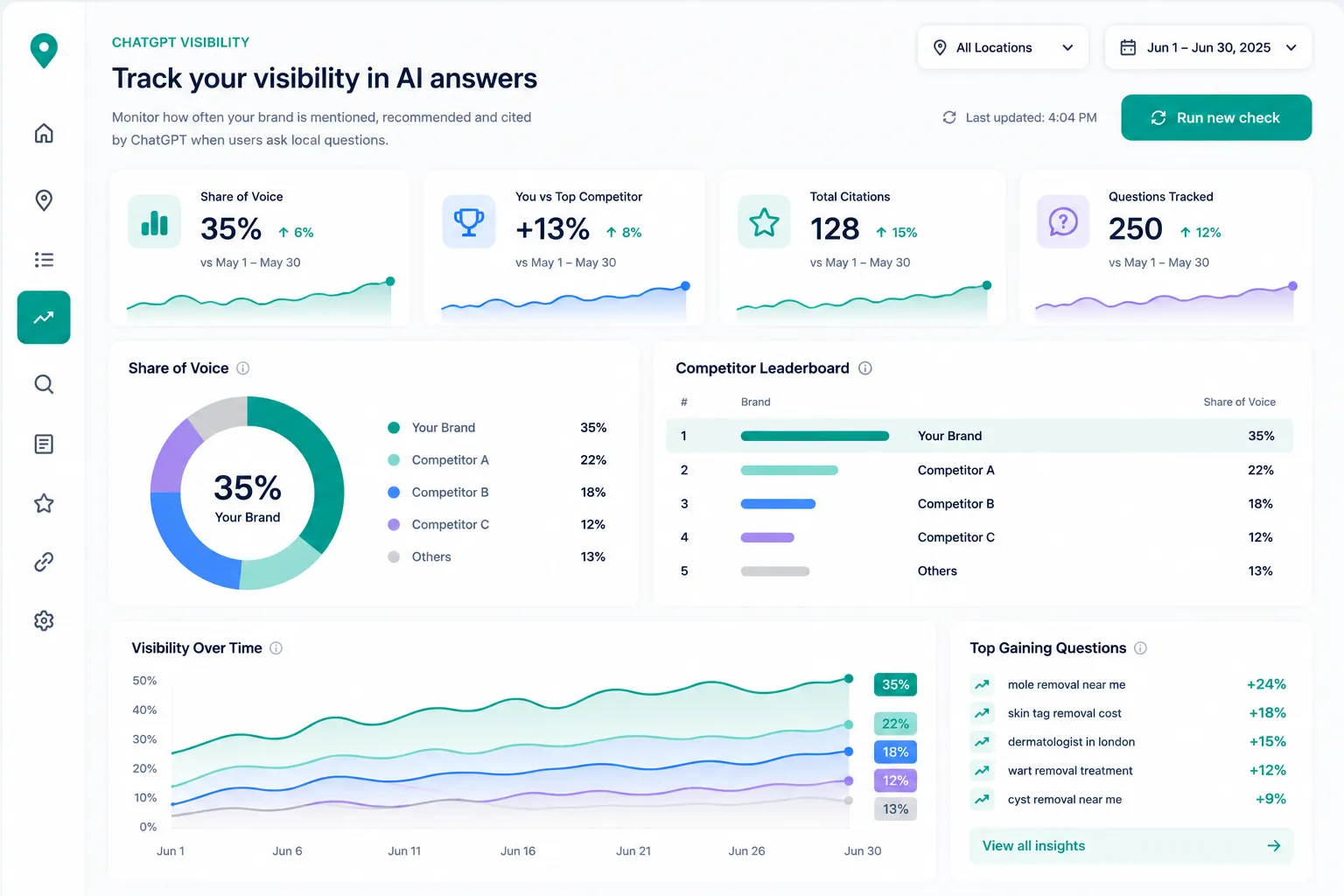
SearchOps asks ChatGPT and Gemini questions like where to buy a good mattress in Manchester or which bike shops in Portland do repairs. You see how often your store is recommended, the retailers named instead, and the review sites, marketplaces and guides the answers cite.

Your share of AI recommendations in each market

05Reviews

What are shoppers saying about each store?

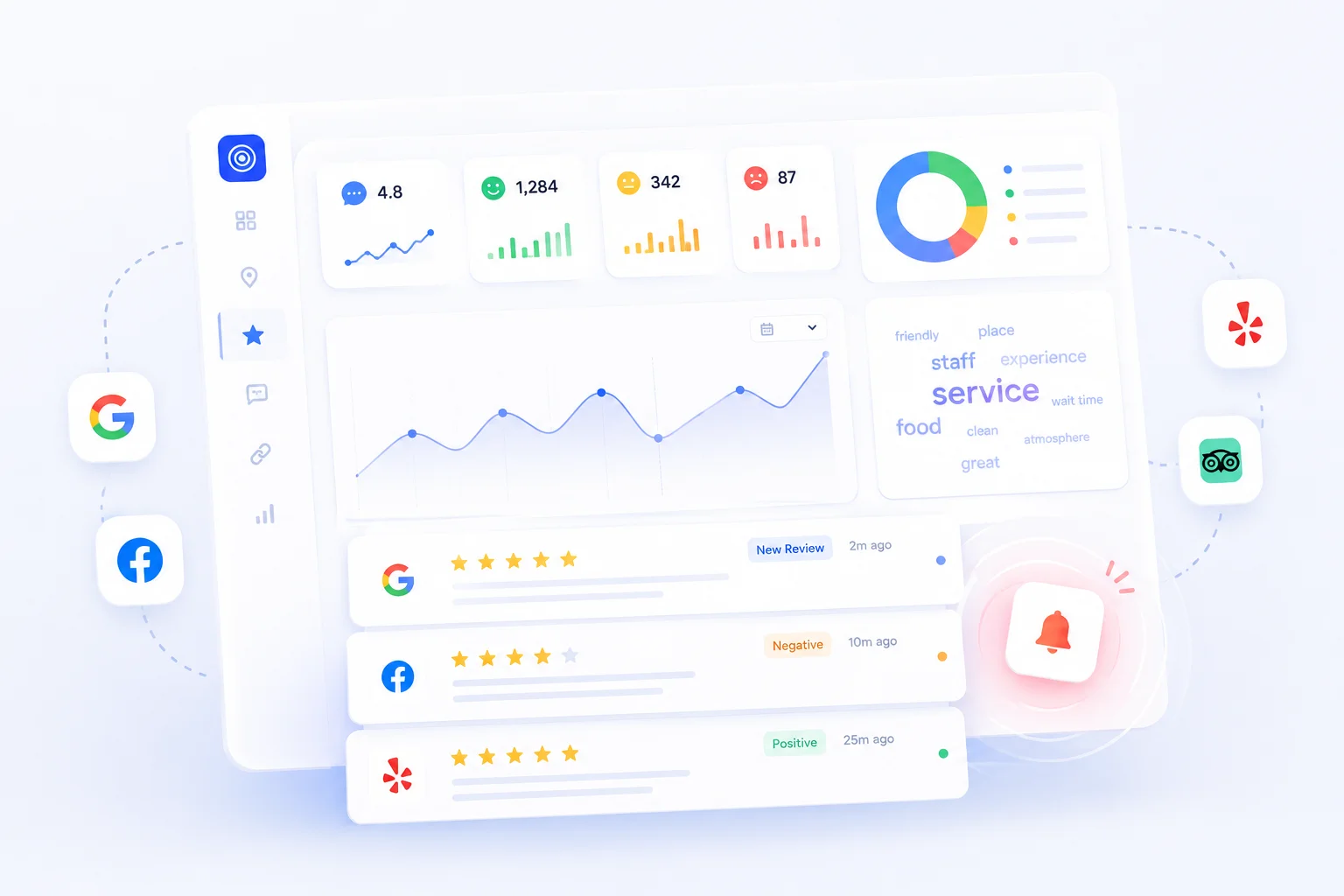
Google reviews, plus Trustpilot on Pro and above, arrive in one feed with sentiment grouped by topic, so staff, prices or waiting times show up as trends rather than one-off complaints. On connected profiles the agent drafts replies for you to check and send.

Store-level reputation you can act on

Used in this step

Before and after

From brand averages to store-by-store answers

Tracking demand
Without the dataOne ranking for the brand name
With SearchOpsProduct, brand and category searches for each store's town
Store catchment
Without the dataAssuming shoppers come from the whole city
With SearchOpsA scan of each store's area, with the stores ahead of it at every point
Estate reporting
Without the dataA brand average that hides weak stores
With SearchOpsEach store's rankings, reviews and profile results side by side
AI recommendations
Without the dataNo view of what assistants tell shoppers
With SearchOpsHow often ChatGPT and Gemini recommend you, and which retailers they name instead
Store reviews
Without the dataHead office reading reviews only when a complaint escalates
With SearchOpsEvery store's reviews in one feed, with sentiment by topic

Use cases

What retailers learn from the data

Illustrative examples from independent shops and multi-store retailers.

Outdoor clothing chain, 30 storesUnited States

Which stores are losing local searches to competitors?

Scans for 'hiking boots near me' across each store's catchment show most stores in the top three near their doors, and six dropping out within a mile, where a rival chain's stores appear instead. Those six have fewer recent reviews, which gives regional managers a short, specific list to work on.

Independent bookshopCork, Ireland

Do people a few streets away even know we're here?

A scan for 'bookshop' across the city shows the shop holding the top three in the streets around it and disappearing a short walk away, where a chain store appears. Tracking the same search as reviews and profile details improve shows whether that boundary moves.

Furniture showroomPerth, Australia

When someone asks ChatGPT where to buy a sofa locally, who comes up?

AI visibility checks ask ChatGPT and Gemini where to buy a good sofa in Perth. The showroom appears in some answers, two national retailers appear in most, and the answers cite a local home guide the showroom isn't featured in. That is a specific, winnable gap.

Phone repair chain, eight shopsBirmingham, UK

Which shops get the most direction requests from Google, and why?

Connected profiles show direction requests, calls and website clicks for each shop. Two shops earn most of the requests, and rank tracking for 'iPhone screen repair' in each town shows the others appearing for far fewer repair searches in their areas. The gap is visibility, not demand.

Choosing a plan

The right plan for one shop or a chain

Plans scale with the stores you track, from an independent with a couple of rivals to watch to a national chain. Every plan includes every tracking tool.

Compare every plan

Starter

For an independent store or a few shops

  • 10 tracked locations, including nearby competitors
  • 1 connected Google profile
  • Every tracking tool
  • Single user

Pro

For regional chains

  • 50 tracked locations
  • 25 connected Google profiles
  • Trustpilot reviews alongside Google
  • API access and MCP server

Agency

For national chains and their agencies

  • 200 tracked locations
  • 100 connected Google profiles
  • White-label client reports
  • Unlimited team members

FAQ

Retail. Questions we get

Distance matters, but so does relevance. Use the category that describes what the store sells, add products and services to the profile, keep hours and attributes such as in-store pickup accurate, and build genuine reviews, which Google names as part of prominence. Chains should also use the same name and category at every location, as Google's guidelines ask. SearchOps shows which product and category searches each store appears for across its catchment.

If you want people in your stores, yes. Local searches with 'near me' or a town name are how people find a store to visit, and a store needs to appear for them with accurate hours and good reviews. SearchOps tracks the local results and the web results for your key searches, so you see both.

Yes. Each store is its own tracked location with its own scans, rankings, reviews and AI visibility, and a report can include several stores side by side. Starter tracks up to 10 locations, Pro 50, Agency 200 and Enterprise up to 500.

Yes. Google's guidelines give each physical location its own profile, staffed during its opening hours, and don't allow more than one profile for the same location. In SearchOps each store is tracked separately.

Track the categories you sell ('furniture store', 'bike shop'), the products and brands people ask for by name, and needs like 'phone repair' or 'click and collect', each with the town or 'near me'. Keywords are unlimited on every plan; what uses your allowance is how often you check them.

Yes. SearchOps asks ChatGPT and Gemini the questions shoppers ask about where to buy, on a schedule, and shows how often your stores are recommended, the retailers named instead, and the sources the answers cite.

No. SearchOps tracks Google, where shoppers search for stores nearby, and the answers AI assistants give when shoppers ask them. Social platforms are a separate channel we don't measure.

Start tracking your real rankings today

See where you actually rank on Google Maps, not where Google tells you. Pick the plan that fits and start tracking from day one.