Geo-Grid Rank Tracking
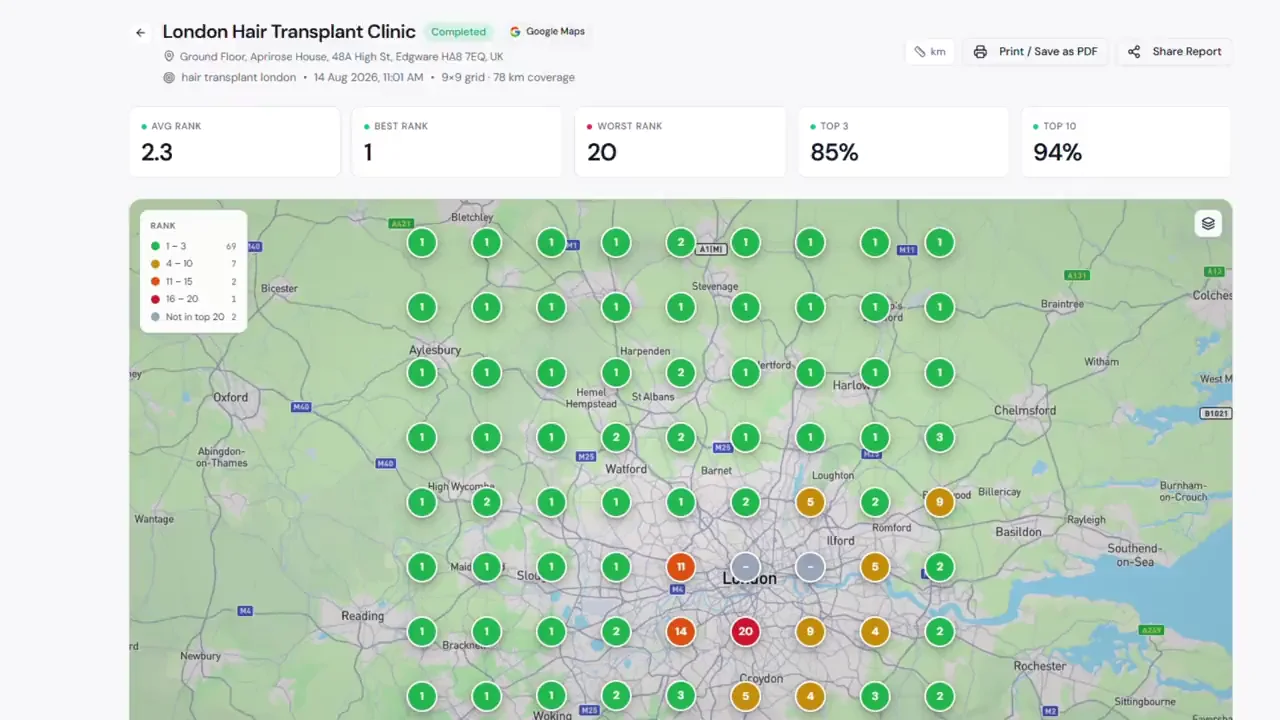
Track your Google Maps ranking from hundreds of coordinates
Learn moreThe person typing 'gym near me' on January 4th has already decided to join somewhere. Local SEO is the only thing standing between you and the chain gym three streets away. Members don't research hard; they book a tour at the first pack result that looks clean, convenient, and credible.
The problem
Fitness is one of the most impulse-driven local sectors. A prospect on a Sunday evening opens Maps, reads the first three gyms' reviews, checks opening hours, and books a tour or a day pass with whoever came up first and looked credible. The gym with the cleanest profile wins a member worth £500–£1,500 a year for every minute saved on the decision.
Seasonal spikes (January, September, post-summer) bring a large share of annual sign-ups into a few weeks.
Reviews swing heavily on cleanliness, staff, and class quality, and unchallenged complaints repel prospects for months.
Class timetables and opening hours mismatch with Google surprisingly often, which tanks trust instantly.
Independent studios are competing directly with chains that buy every paid 'gym near me' slot.
How SearchOps fits
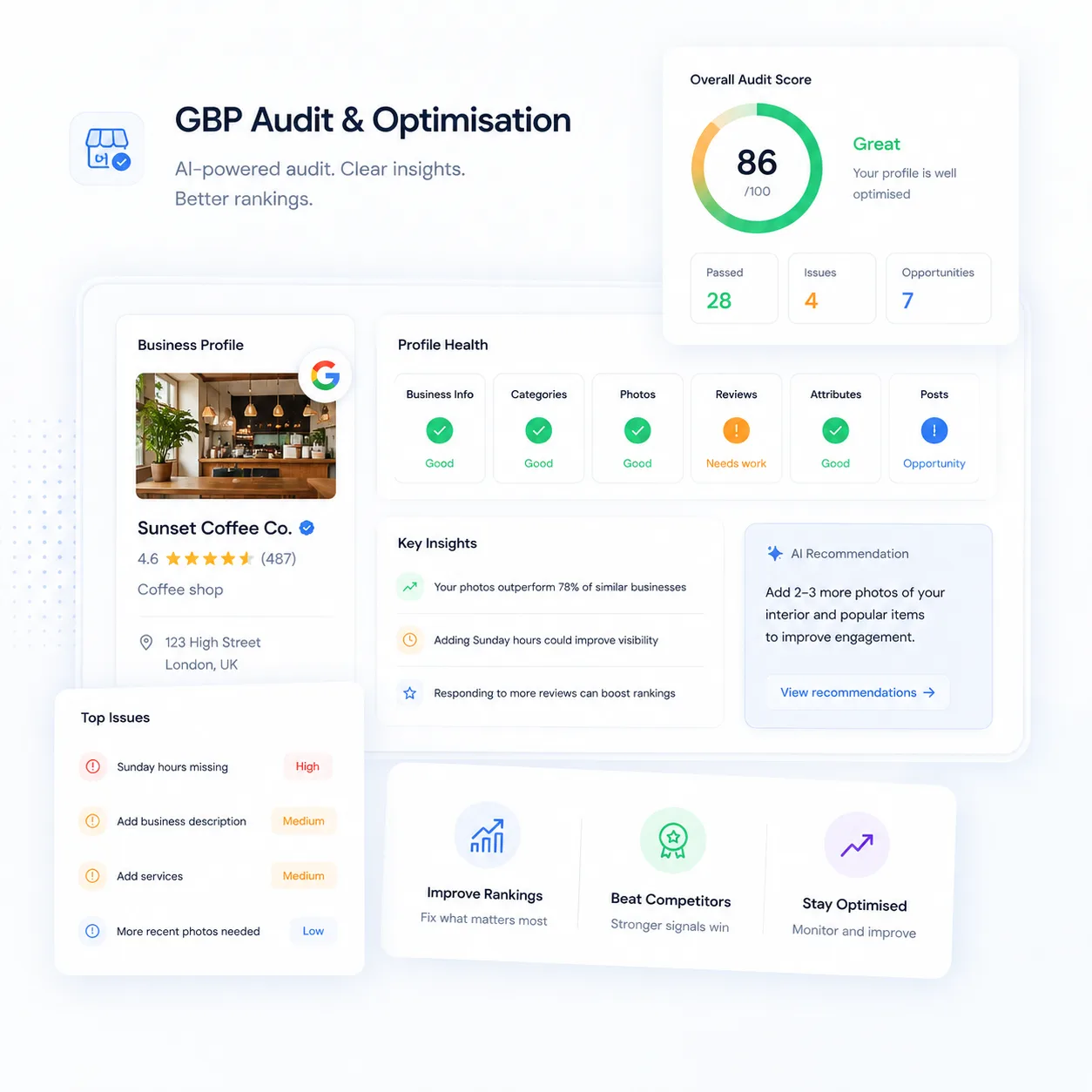
Geo-grid tracking shows which neighbourhoods actually find you when a prospect searches at 6pm on a weeknight. Review monitoring catches every new review the same day so your community manager can respond while the member's still feeling great about it. GBP audits find missing hours, thin photo galleries and other profile gaps that quietly cost tour bookings.
Playbook
Fitness local SEO is a game of first impressions and seasonal pushes. These are the tactics that consistently move the needle for independent studios and smaller chains.
'Gym', 'fitness centre', 'yoga studio', 'pilates studio', 'personal trainer' each rank in separate packs with separate intent. A CrossFit box listed as 'gym' is competing with chains; listed as 'CrossFit gym' it's competing with three others in the city. Specificity wins.
Most prospects want to know when the 6am HIIT class runs before they commit. A timetable buried on your website loses them; a timetable in your Services section and refreshed weekly as a Post keeps them on the profile and booking.
Prospects can tell the difference immediately. Real photos of your floor, classes in session, the changing rooms (clean, well-lit) and members (with consent) signal authenticity. Stock images of glossy equipment quietly cost you sign-ups.
People are most likely to write a review straight after a good first session, not a year into their membership. Build the ask into your trial follow-up: a text an hour after the session with a direct review link, sent to everyone who came, not only the people who seemed keen.
New year and back-to-school are when rankings compress and freshness signals matter most. Post new photos weekly, launch a new-member offer as a Post, and update your timetable for the season. Google rewards visible activity just when your prospects are most decisive.
FAQ
The same platform, set up for a different kind of business.