Local SEO for dentists and dental groups

A dental practice is found through more searches than its name suggests. 'Dentist near me' brings in check-ups, while implants, Invisalign, emergency appointments and children's dentistry can each show a different set of practices on Google Maps and in AI answers. SearchOps tracks each treatment across the catchment of every practice you run, so you can see which ones bring in new patients and which go to the practice down the road.

  • Each treatment tracked across the practice's catchment
  • Google Maps, Search, AI Overviews, ChatGPT and Gemini
  • Review replies drafted for you to check before they're posted
  • Every practice in a group tracked on its own

The problem

Every treatment is its own local search

Patients rarely search for a dentist in general when they want something specific. Someone with toothache searches for an emergency dentist, someone weighing up clear aligners searches for Invisalign, and a parent looks for a children's dentist. Google can show a different set of practices for each, and AI assistants name their own shortlist when asked. A practice that leads for 'dentist' can be missing from the searches that bring in its most valuable work.

01

High-value treatments such as implants and aligners can each show different practices on the map.

02

Specialist titles are regulated in many countries (in the UK, only dentists on the GDC specialist list may use them), so categories such as 'Orthodontist' have to match who actually works at the practice.

03

Old listings for former associates or a previous address can split reviews and send patients to the wrong place.

04

Reviews often mention treatment, and a public reply that confirms someone is a patient can breach confidentiality.

Questions SearchOps answers

What a practice owner or group marketing manager needs to know

Four questions decide whether new patients find the practice. Each is answered by data SearchOps collects for every practice you track.

01Treatments

Which treatments do we appear for, and where?

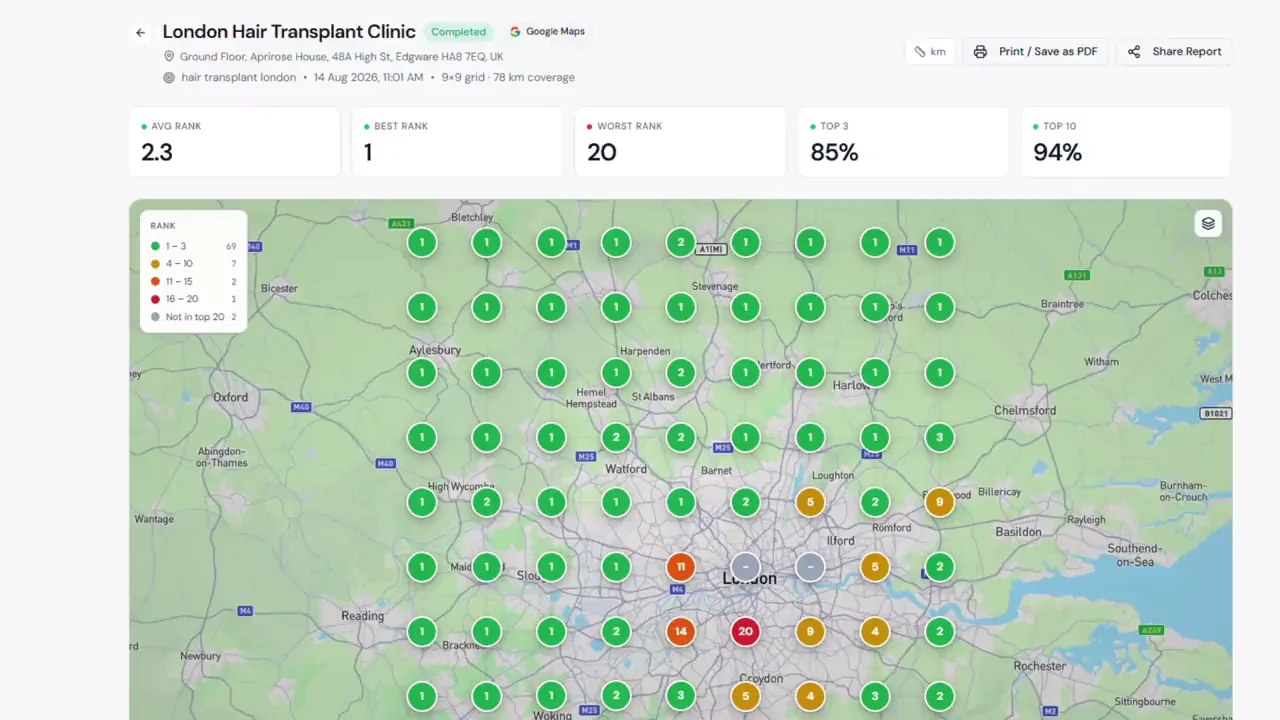
Track implants, Invisalign, emergency appointments, hygiene and children's dentistry as separate keywords. Geo-grid scans show your Google Maps position for each one from points across your catchment, so you can see the streets where you lead and the ones where another practice takes the patient.

Visibility by treatment, across the whole catchment

02Rivals

Which practices take the patients we miss?

Every scan names the practices that appear ahead of you at each point. Geo-Grid Insights compares you with them on categories, review counts and listing details, so you can see what the leaders have that your profile doesn't.

The practices you're up against, and what sets them apart

03AI answers

What do assistants say when someone asks for a dentist?

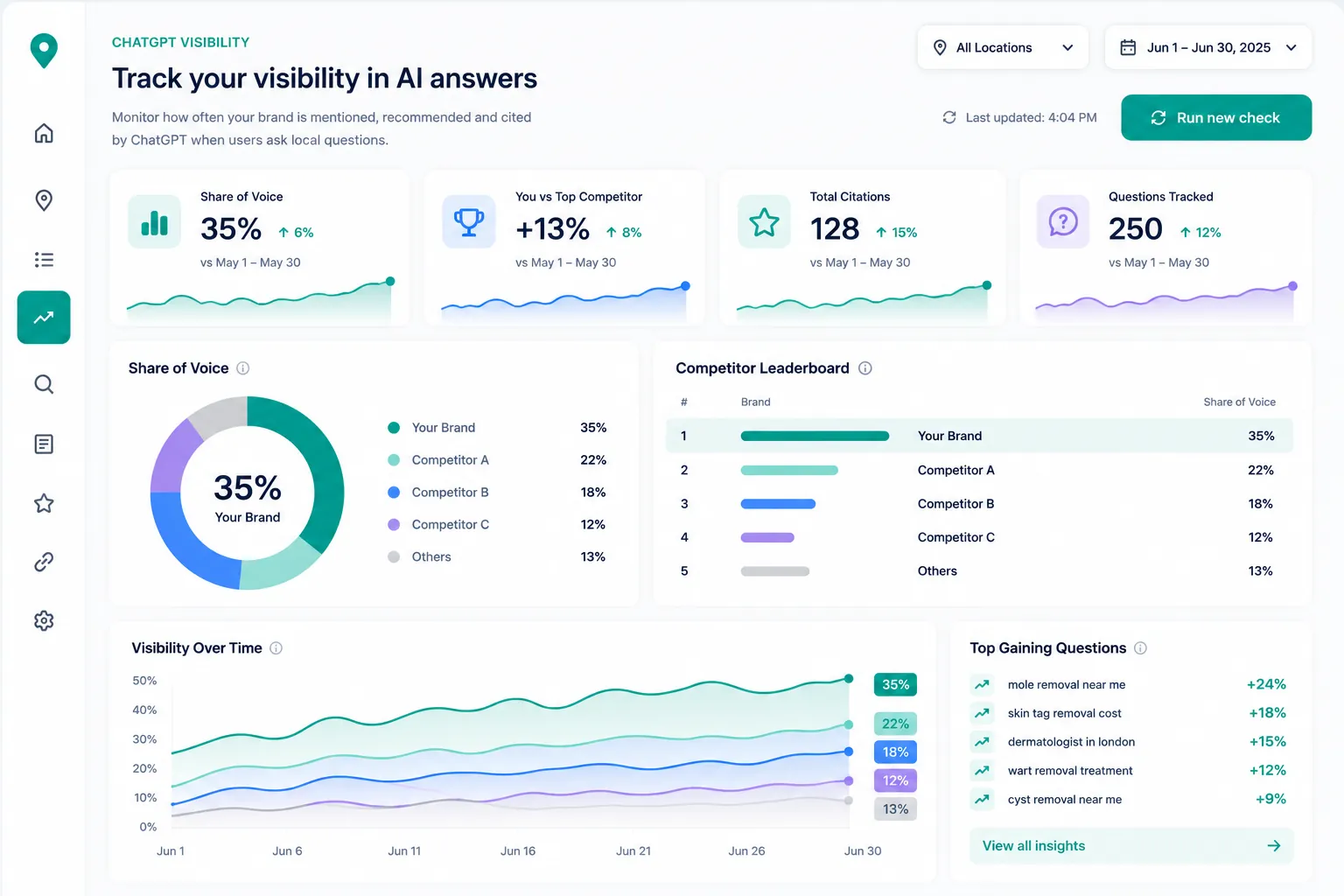
SearchOps asks ChatGPT and Gemini the questions patients ask, such as which practice is good with nervous patients, who offers sedation or where to find a weekend emergency appointment. You see how often your practice is named, who is named instead and the sources the answers rely on.

Your share of AI recommendations, by kind of patient

04Profile and reviews

Is the profile complete, and what are patients saying?

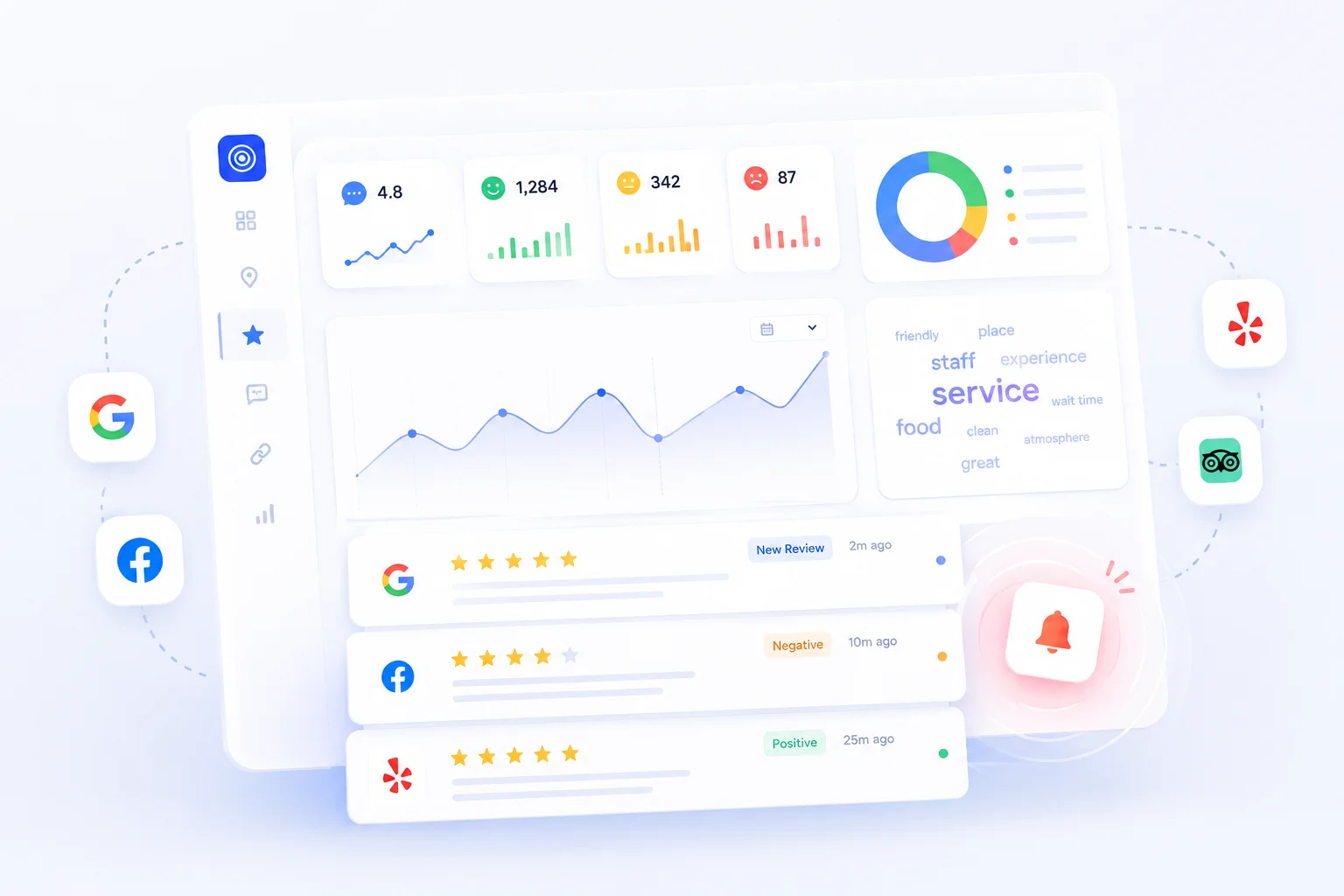
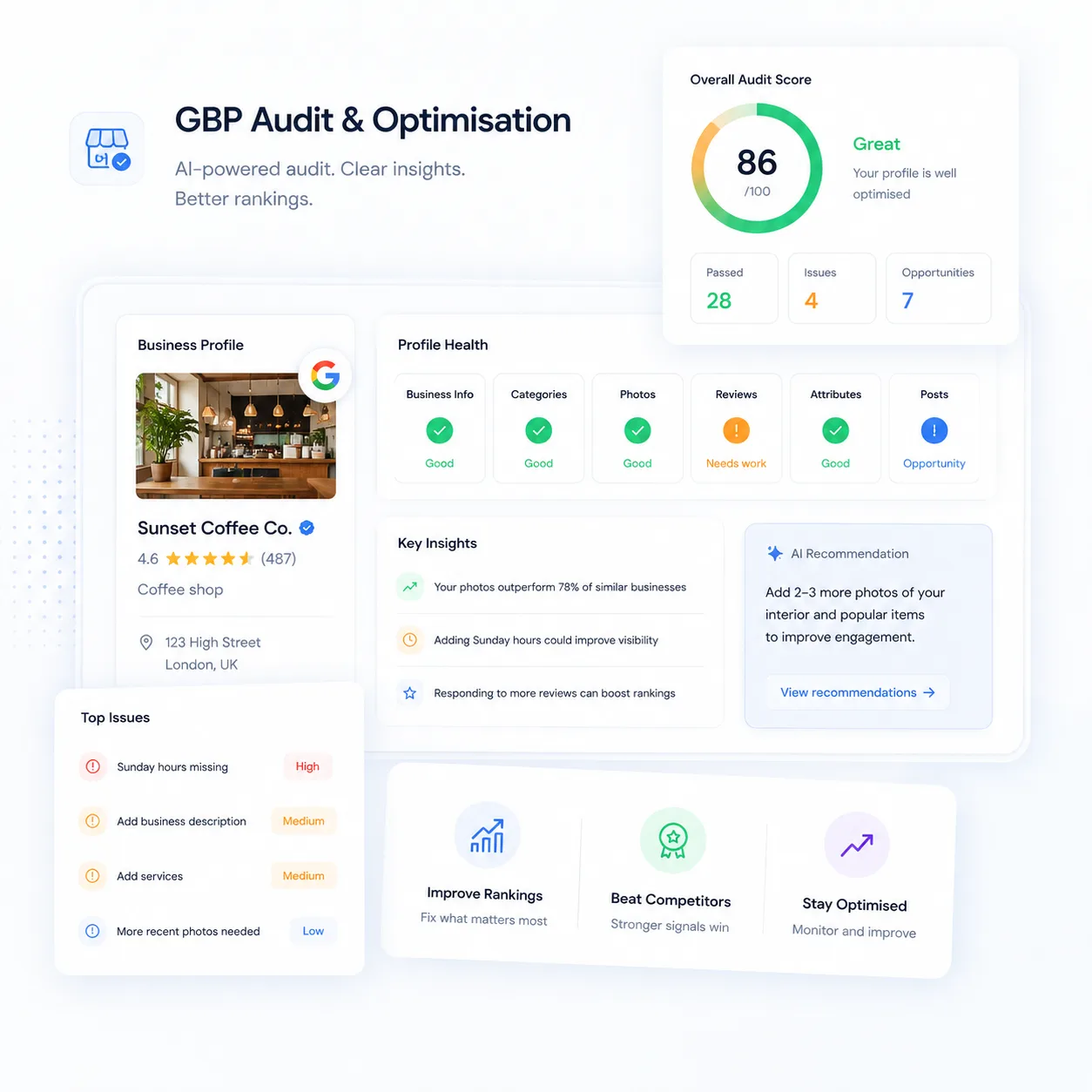
The GBP audit checks categories, services, hours and photos against what Google expects. New reviews arrive in one inbox with sentiment grouped by topic, and the agent drafts replies that stay general about care for you to check before they're posted.

A complete profile and safe, prompt replies

What to track

A starting setup for a dental practice

Copy these into SearchOps for each practice, swapping in your own town and treatments. Start with the treatments you want more of, then add the rest.

Searches to scan on Google

Add each as a keyword. Geo-grid scans show where you appear for it on Google Maps, in the local pack and in AI answers on Google.

  • dentist near me
  • emergency dentist
  • dental implants [town]
  • Invisalign [town]
  • teeth whitening [town]
  • children's dentist
  • dentist taking new patients
  • sedation dentist
How geo-grid scans work

Questions to put to ChatGPT and Gemini

SearchOps asks these on a schedule and records who is named, how you're described and the sources the answers cite.

  • Which dentists in [area] are good with nervous patients?
  • Where can I get an emergency dental appointment this weekend near [area]?
  • Who is a well-reviewed implant dentist near [area]?
  • Which dental practices in [area] are good with young children?
  • Is there a dentist in [area] taking new patients?
How AI visibility checks work

Profile details to get right

The audit scores each one against the rivals from your scans. Edit them from SearchOps, approve each change and undo it if you need to.

  • Primary category 'Dentist', with 'Cosmetic dentist', 'Pediatric dentist' or 'Orthodontist' added only where accurate
  • Every treatment you want more of listed as a service
  • Regular and holiday hours, including any emergency sessions
  • A booking link that goes straight to appointments
  • Recent photos of the treatment rooms, reception and team
  • A description that names the main treatments and the area you serve
How the profile manager works

Before and after

What changes when you see demand treatment by treatment

New-patient demand
Without the dataOne ranking for 'dentist'
With SearchOpsVisibility for each treatment across the whole catchment
Emergency appointments
Without the dataNo idea who appears when patients search out of hours
With SearchOpsScans scheduled for the day and time patients search
Nervous and first-time patients
Without the dataNo view of what assistants recommend
With SearchOpsHow often ChatGPT and Gemini name you, and who they name instead
The profile
Without the dataEdited when someone remembers
With SearchOpsScored against the practices ahead of you, edited with approval and undo
Reviews
Without the dataReplies written in a hurry, or not at all
With SearchOpsOne inbox, topics by sentiment, replies drafted for you to check

Use cases

Questions dental practices bring to the data

Illustrative examples, and the kind of answer SearchOps gives.

Independent practiceDenver, US

“We pay for implant ads. Do we appear for implants without them?”

A geo-grid scan for 'dental implants' shows the practice in the top three within a mile of the door and out of the local pack beyond it. The practices that hold the wider area list implants as a service and have far more recent reviews, which gives the practice two concrete gaps to close.

Dental group, six practicesDublin, Ireland

“Are we named when people ask ChatGPT for a dentist who is good with nervous patients?”

AI visibility checks show two of the six practices named regularly and the other four rarely. The answers lean on a review site where the named practices have current listings and the others have none, so the fix starts with those listings rather than the website.

Children's dental practiceAuckland, New Zealand

“Do parents searching for a kids' dentist find us beyond our own suburb?”

Scans for 'children's dentist' show the practice leading in its suburb and fading two suburbs out, where a general practice with more reviews appears first. That marks out where the practice can realistically grow and where it would be competing on reviews alone.

Two-site practiceManchester, UK

“Our second site opened last year. Is it taking patients from the first?”

Grids for both sites show them overlapping for 'dentist' across a band of streets between them, while only the original site appears for Invisalign. Giving each site its own lean in services and description, rather than identical profiles, lets each one lead where it's closest.

Choosing a plan

The right plan for a practice or a group

A single practice, a growing group or an agency with healthcare clients: plans scale with the practices and clinician profiles you track and the Google profiles you connect. Every plan includes every tracking tool.

Compare every plan

Starter

For a single practice

  • 10 tracked locations, including nearby practices to watch
  • 1 connected Google profile
  • Google reviews in one inbox
  • Single user

Pro

For a growing practice or a small group

  • 50 tracked locations
  • 25 connected Google profiles
  • Trustpilot and Tripadvisor reviews alongside Google
  • API access and MCP server

Agency

For healthcare groups and the agencies that market them

  • 200 tracked locations
  • 100 connected Google profiles
  • White-label client reports
  • Unlimited team members

FAQ

Dentists. Questions we get

Make sure the profile says the practice offers the treatment: list it as a service, mention it in the description and use a matching category only where it is accurate. Then build a steady flow of genuine reviews, which Google names as part of prominence. SearchOps shows, treatment by treatment, which parts of your catchment you appear in and which practices appear instead.

Use a category only if it describes the practice. Many regulators restrict specialist titles: in the UK, for example, only dentists on the GDC specialist list may present themselves as specialists, so 'Orthodontist' needs a registered specialist at the practice. A practice that offers aligners without one can list them as a service instead.

Keep the reply general. Thank the reviewer, don't confirm they are a patient or refer to their treatment, and invite them to contact the practice directly. In SearchOps the agent drafts replies in that style for you to check before they're posted, and automatic replies stay off unless you switch them on.

They can, for general searches across the streets between them. Keep each practice's profile distinct, with its own address, phone, team and photos, and give each a lean that reflects what it does best. Scans for both sites show where they overlap and whether the change is working.

Yes. 'Emergency dentist' is a keyword like any other, and it is the search where accurate hours matter most, because a patient in pain needs a practice that is open. Keep regular and holiday hours current, and track the keyword for each practice that offers emergency appointments.

Provider status is shown on Invisalign's own doctor locator, which is separate from your Google profile. On Google, what you control is listing Invisalign as a service, mentioning it in the description and collecting reviews, and SearchOps tracks whether that moves your visibility for the searches patients make.

There is no fixed number, because it depends on the practices you appear beside. Geo-Grid Insights shows the review counts and ratings of the practices ahead of you at each point of a scan, so you can see the gap you actually need to close.

Yes. Scans can be scheduled daily, weekly, every two weeks or monthly, on the day and at the time you pick, so you can check 'emergency dentist' on a Saturday morning or a weekday evening.

Start tracking your real rankings today

See where you actually rank on Google Maps, not where Google tells you. Pick the plan that fits and start tracking from day one.